Secret password? 🤫
My role
My role
Led UX|UI design
Led UX|UI design
Client
Client
Verizon
Verizon
Platform
Platform
Mobile app
Mobile app
Timeline
Timeline
February 2025 - Present
February 2025 - Present
The product
The product
Troubleshooting support
Troubleshooting support
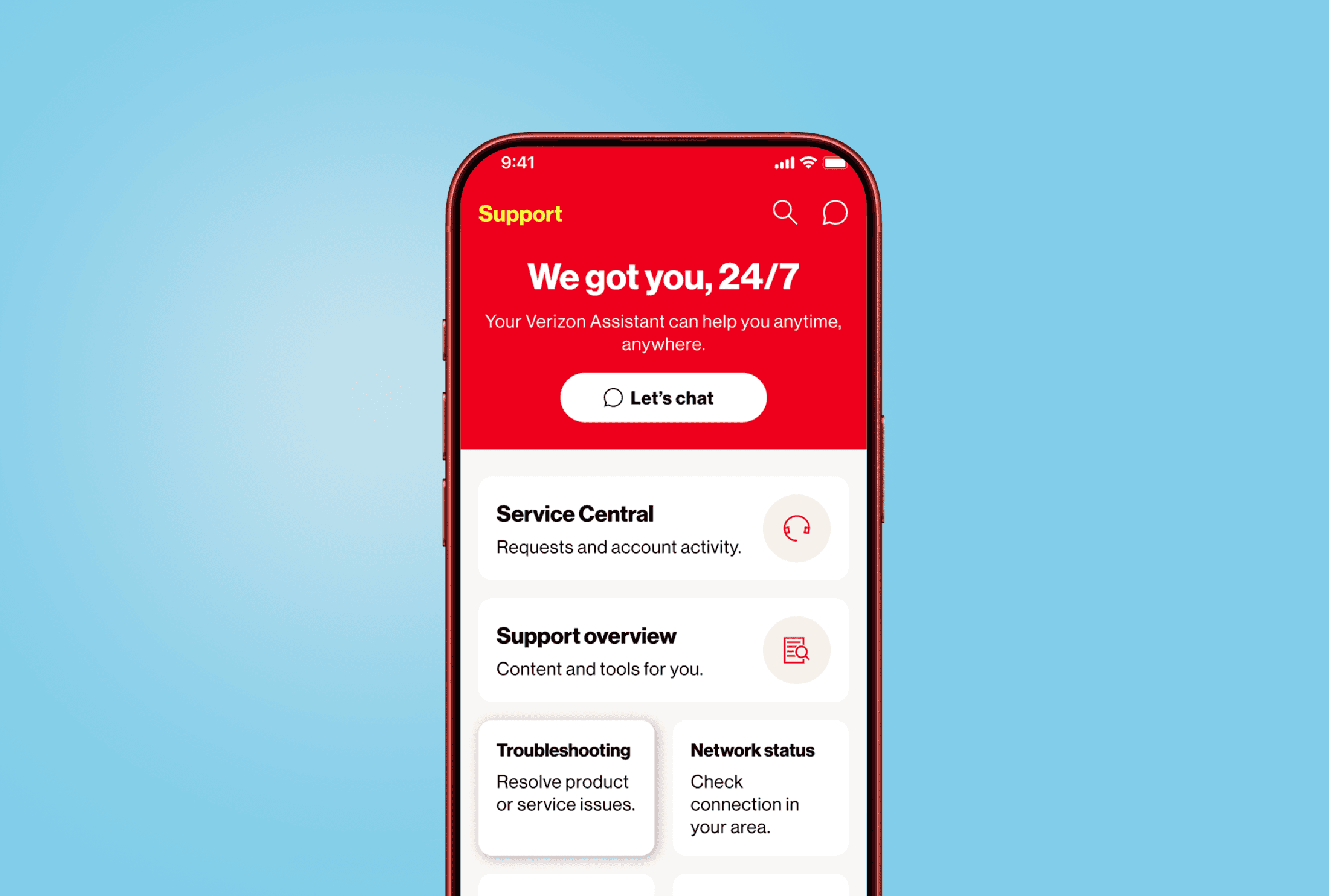
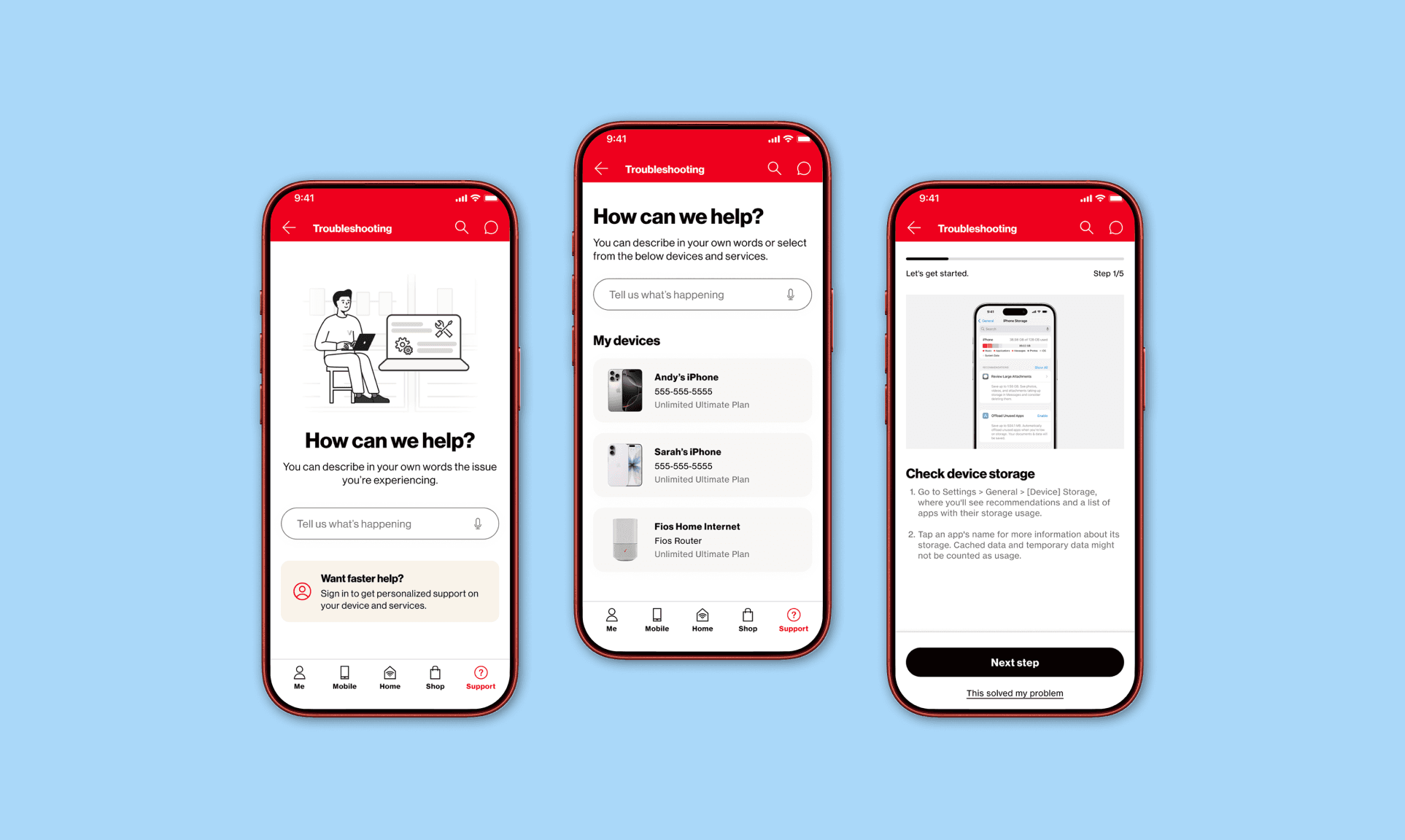
Verizon serves millions of customers across mobile, home internet, and connected devices. When something goes wrong, troubleshooting becomes the front door to self service within the support ecosystem. I was the lead designer in reimagining the next-generation of this design framework, created to be more adaptive, human, and scalable. For phase one we put an emphasis on mobile app first to create a more personalized experience. Customers will be able to resolve issues quickly with our digital guidance.
Verizon serves millions of customers across mobile, home internet, and connected devices. When something goes wrong, troubleshooting becomes the front door to self service within the support ecosystem. I was the lead designer in reimagining the next-generation of this design framework, created to be more adaptive, human, and scalable. For phase one we put an emphasis on mobile app first to create a more personalized experience. Customers will be able to resolve issues quickly with our digital guidance.
Opportunity
Opportunity
Make troubleshooting interactive
Make troubleshooting interactive
The opportunity was not simply to make troubleshooting easier, but to make it smarter and more aligned with how people naturally think and communicate. It’s a self-service tool used to get faster help without having to call a representative. We want to give customers the ability to describe their issue in their own words, understand their symptoms, and utilize this information combined with Verizon intelligence to direct them to the right solution.
The opportunity was not simply to make troubleshooting easier, but to make it smarter and more aligned with how people naturally think and communicate. It’s a self-service tool used to get faster help without having to call a representative. We want to give customers the ability to describe their issue in their own words, understand their symptoms, and utilize this information combined with Verizon intelligence to direct them to the right solution.
The problem
The problem
Customer journey is rigid
Customer journey is rigid
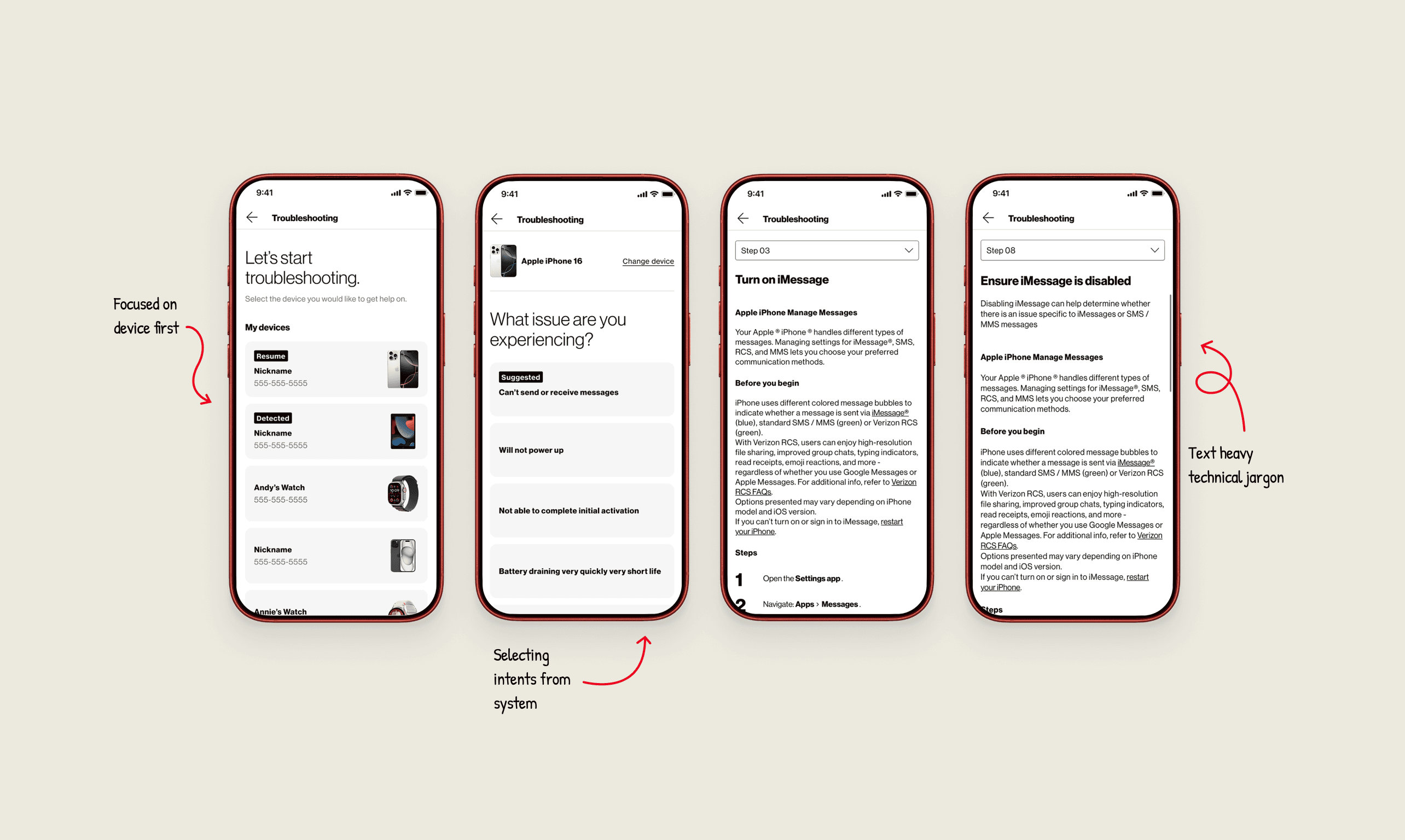
Verizon’s existing troubleshooting experience was built around system logic rather than customer reality.
Customers were frequently routed to the wrong troubleshooting paths because the system required them to select from our technical categories that may not be specific to their issue.
• Customers struggled to describe their issue in a way the system could interpret.
• Troubleshooting flows were text-heavy and full of technical jargon.
• Too many steps in a linear pathway.
Verizon’s existing troubleshooting experience was built around system logic rather than customer reality.
Customers were frequently routed to the wrong troubleshooting paths because the system required them to select from our technical categories that may not be specific to their issue.
• Customers struggled to describe their issue in a way the system could interpret.
• Troubleshooting flows were text-heavy and full of technical jargon.
• Too many steps in a linear pathway.
Business goals
Business goals
Key metrics to target
Key metrics to target
With over 370K customers visiting troubleshooting monthly, nearly half who tried to fix their issue online still needed to call Verizon shortly within a 7-day period. This signaled a major opportunity to improve self-service, clarity, and routing.
With over 370K customers visiting troubleshooting monthly, nearly half who tried to fix their issue online still needed to call Verizon shortly within a 7-day period. This signaled a major opportunity to improve self-service, clarity, and routing.
370k
370k
Avg customer monthly visits
Avg customer monthly visits
48% ↓
48% ↓
7-day call in rate (need to reduce)
7-day call in rate (need to reduce)
Research insights
Research insights
Brainstorming ideas
Brainstorming ideas
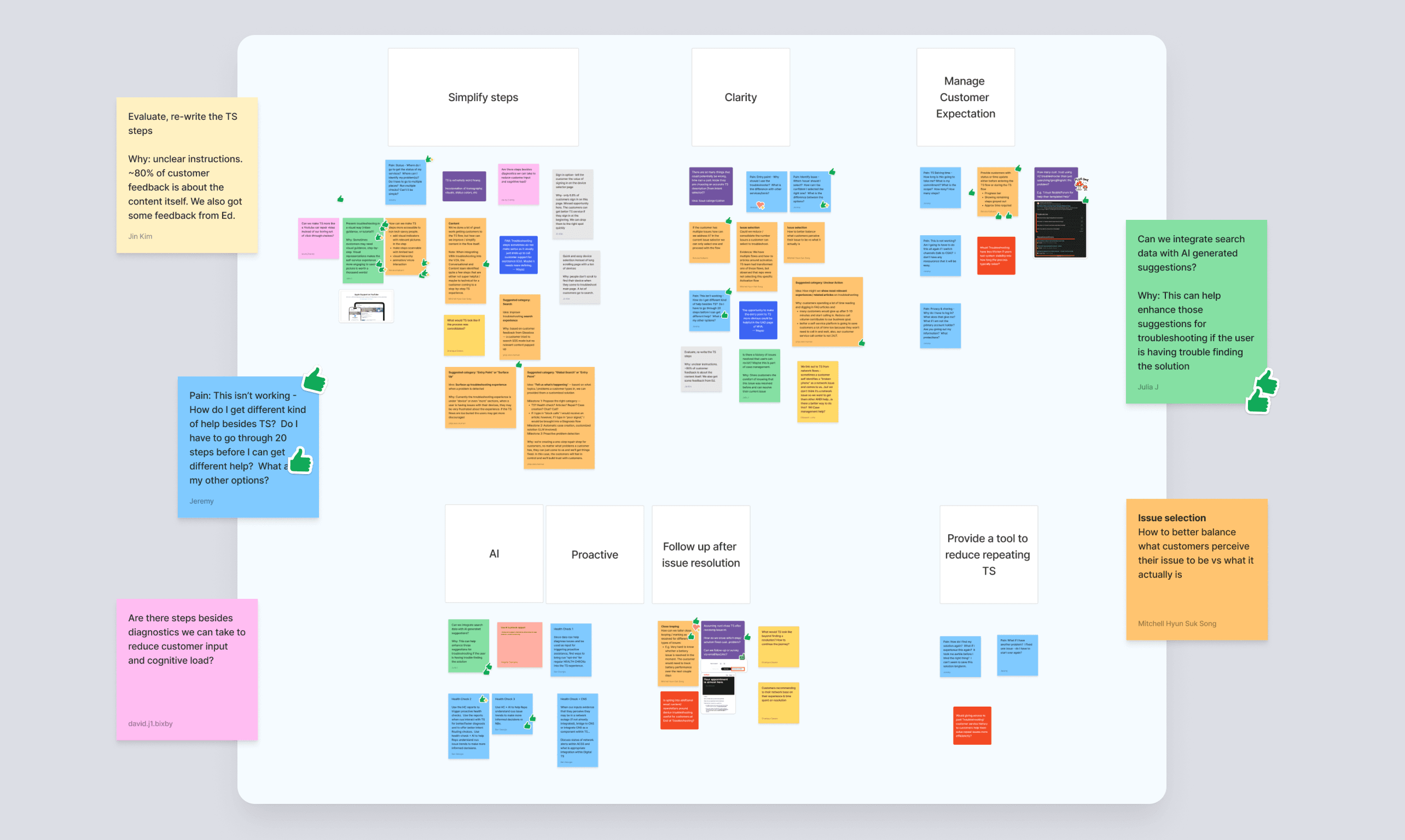
Research revealed that customers were frequently misrouted, overwhelmed by technical language, and stuck in repetitive troubleshooting loops. To address this, the design team and I led a cross-functional workshop to realign around customer mental models. We focused on reducing cognitive load, improving clarity, and designing more adaptive, symptom-based and visually guided troubleshooting paths that route customers to the right solution faster.
Research revealed that customers were frequently misrouted, overwhelmed by technical language, and stuck in repetitive troubleshooting loops. To address this, the design team and I led a cross-functional workshop to realign around customer mental models. We focused on reducing cognitive load, improving clarity, and designing more adaptive, symptom-based and visually guided troubleshooting paths that route customers to the right solution faster.
Design approach
Design approach
Concepts delivered
Concepts delivered
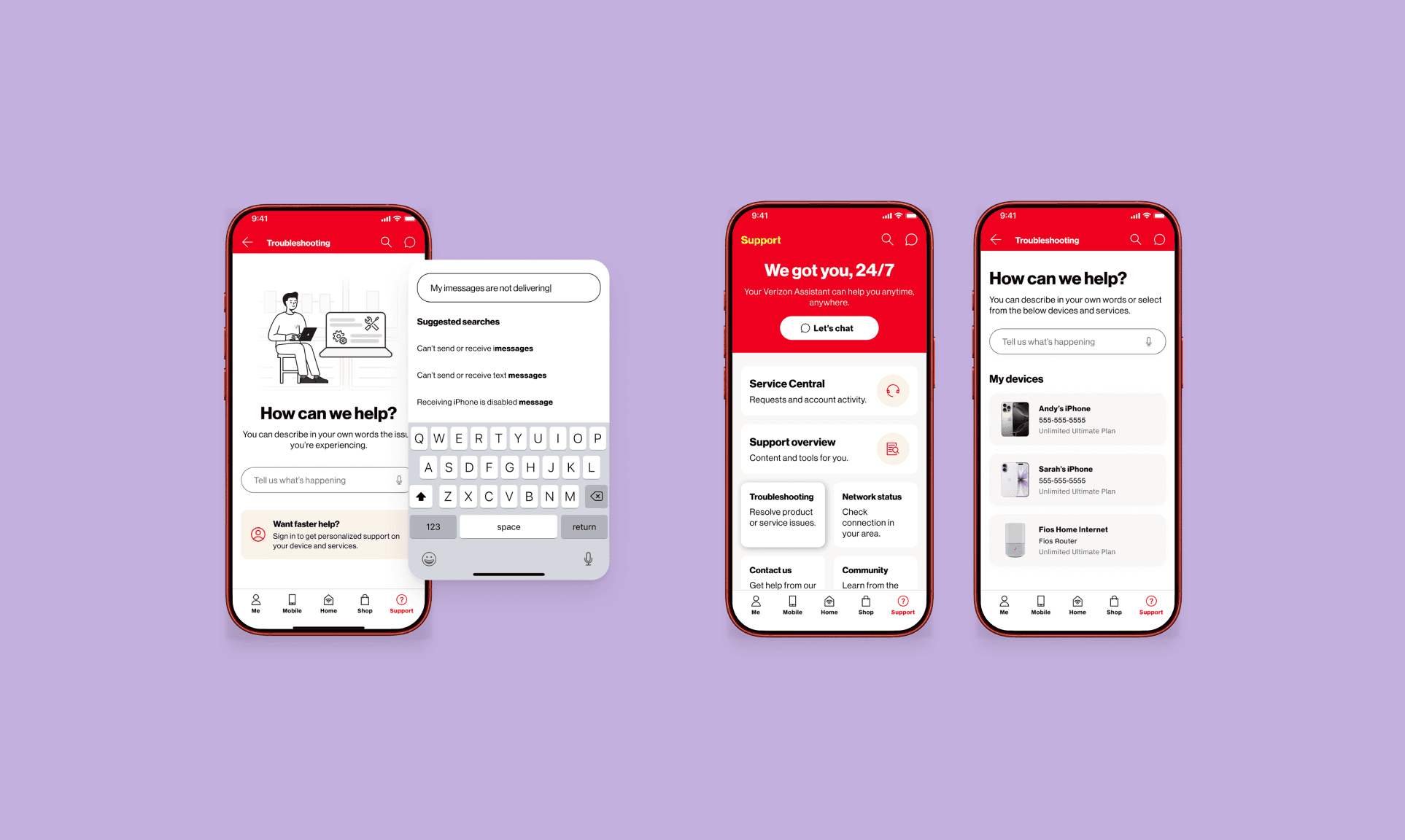
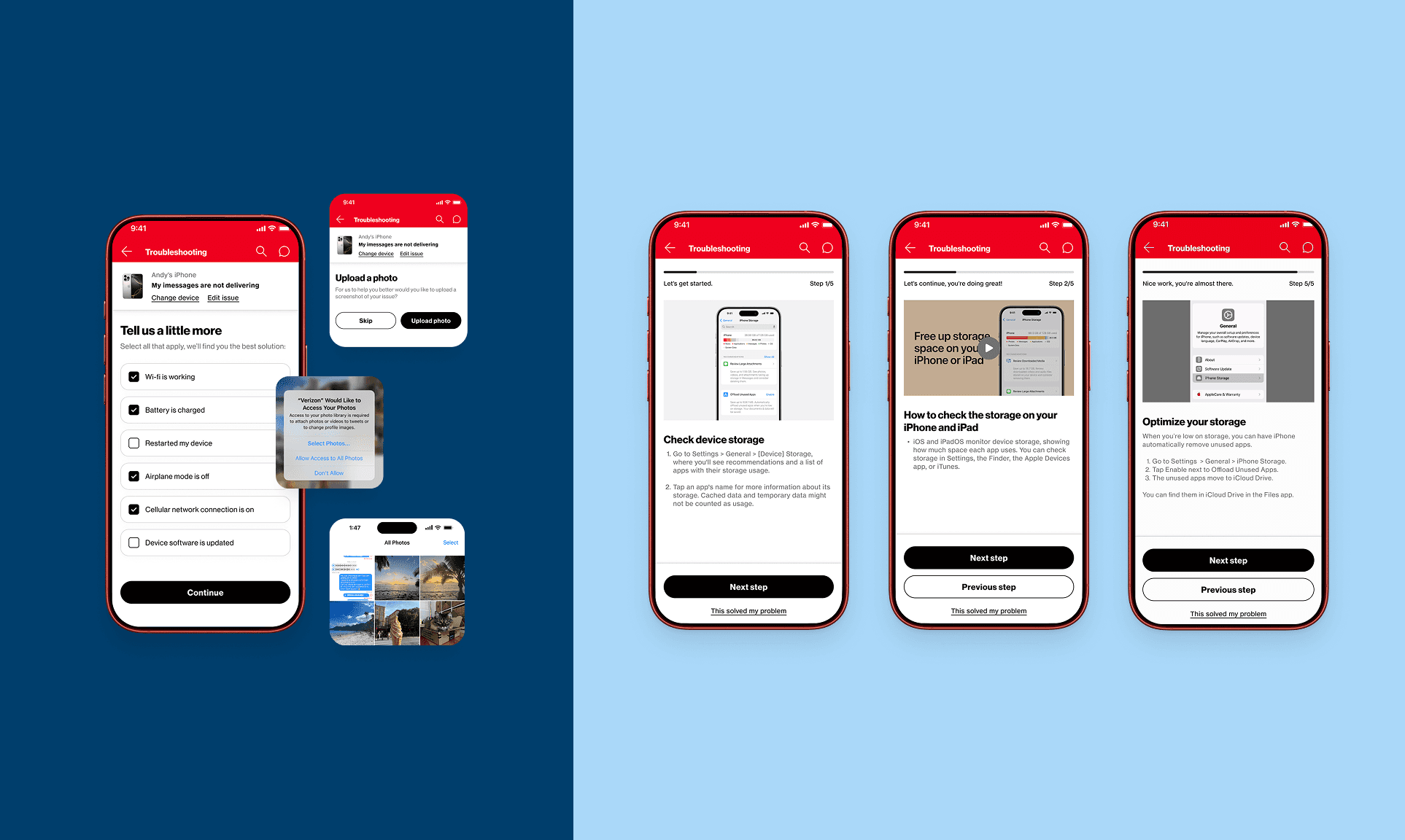
I led the redesign by creating a framework between customer and system to feel more interactive. Potential prospects and current customers will also have to be considered, the un-authenticated and authenticated experience. We followed these 3 design pillars to design into:
Issue Articulation: Empower customers to describe problems in their own words, using symptoms to route customers to the right path to find a solution. (Device and account related)
Visually Assisted Troubleshooting: Reduce cognitive load by simplifying steps with AI and adding visuals (images, gifs, videos, etc.)
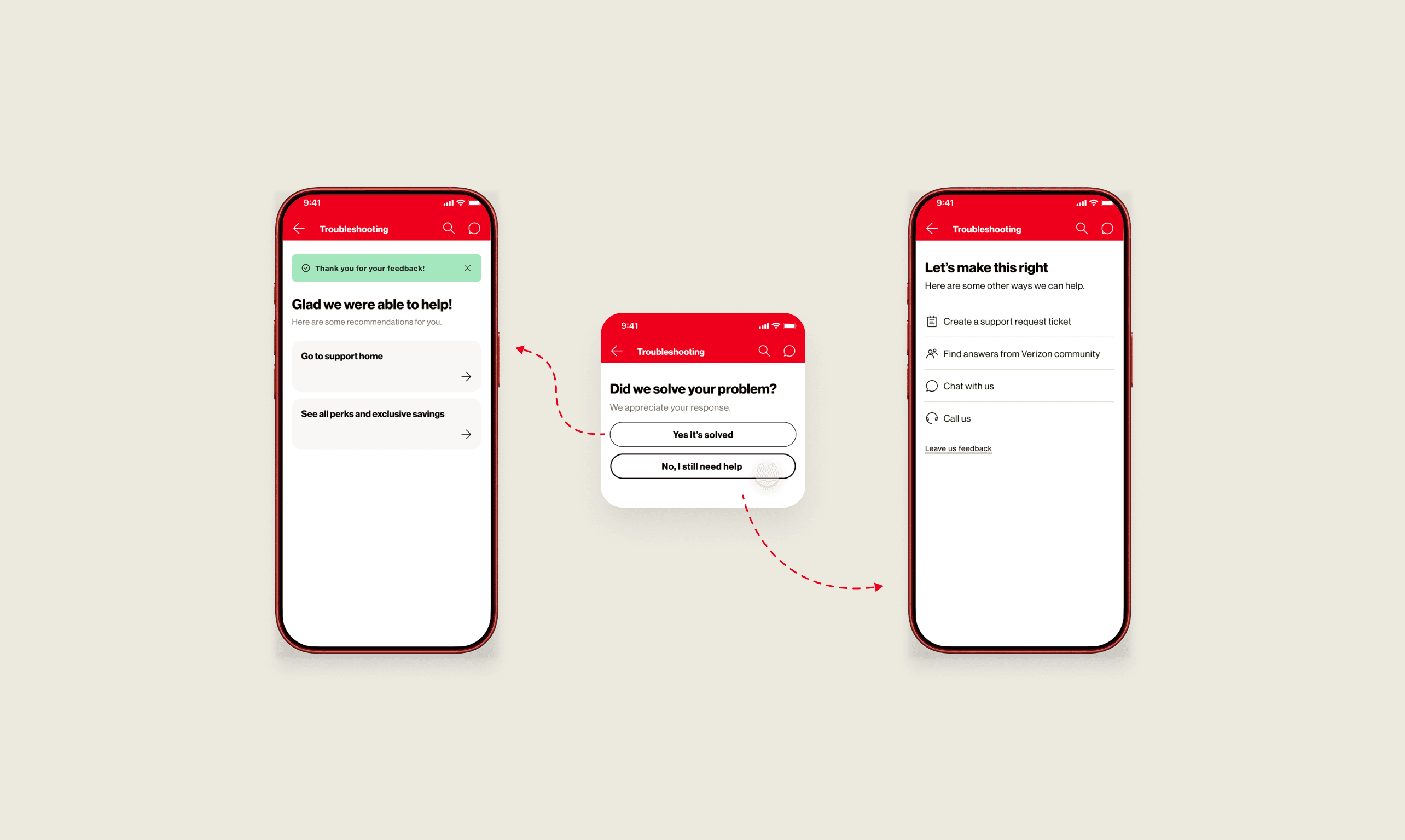
Closing Loop: Ensure customers are satisfied with their experience, if issue isn’t solved, we will guide them to the best next steps they can take.
I led the redesign by creating a framework between customer and system to feel more interactive. Potential prospects and current customers will also have to be considered, the un-authenticated and authenticated experience. We followed these 3 design pillars to design into:
Issue Articulation: Empower customers to describe problems in their own words, using symptoms to route customers to the right path to find a solution. (Device and account related)
Visually Assisted Troubleshooting: Reduce cognitive load by simplifying steps with AI and adding visuals (images, gifs, videos, etc.)
Closing Loop: Ensure customers are satisfied with their experience, if issue isn’t solved, we will guide them to the best next steps they can take.
Future thinking 🤔
Future thinking 🤔
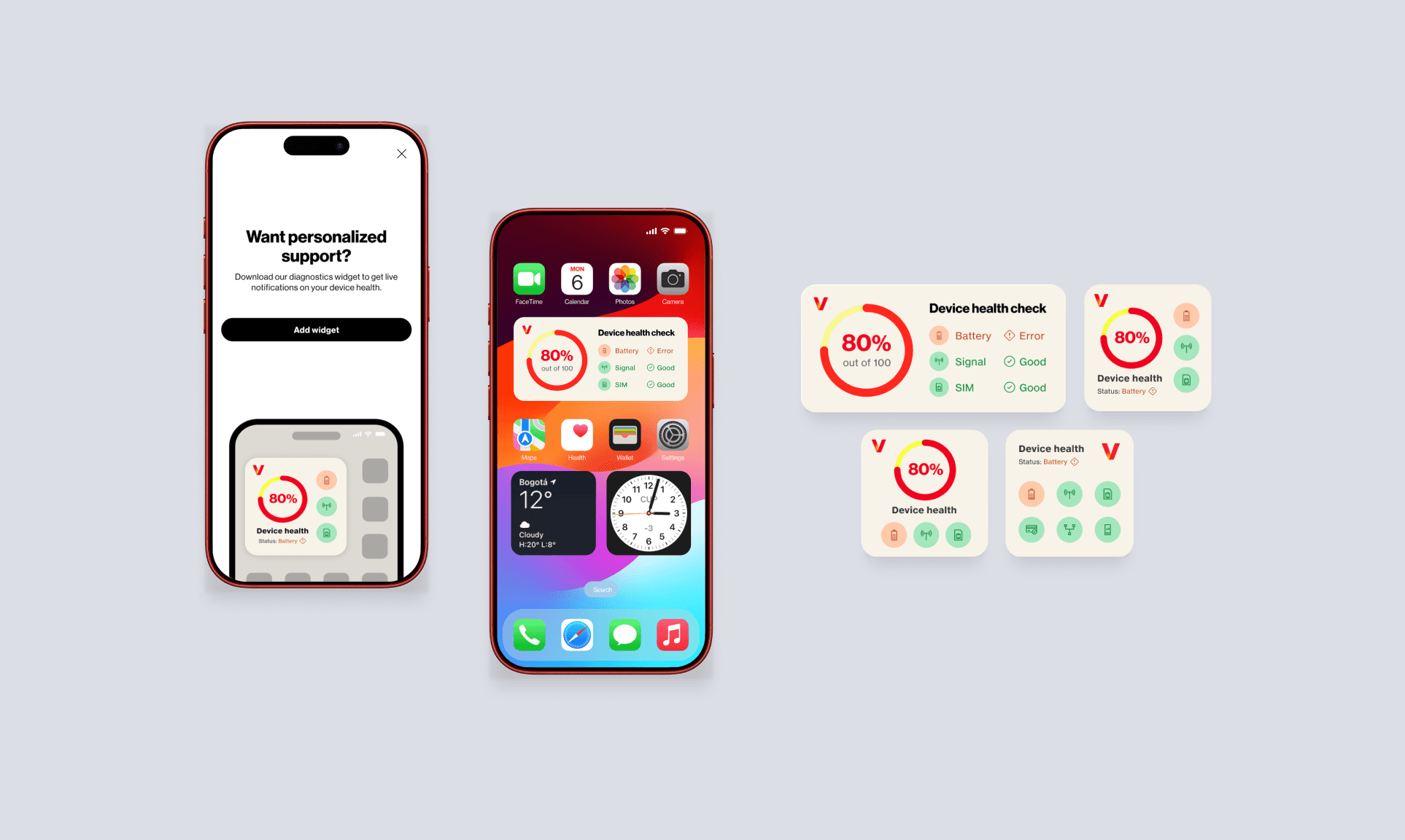
For future iterations, I explored how proactive diagnostics could evolve into automated support that identifies and resolves issues before customers even realize something is wrong. By surfacing problems early and guiding customers through seamless next steps, this concept shifts troubleshooting from reactive problem-solving to proactive care, creating a more effortless and trusted support experience.
For future iterations, I explored how proactive diagnostics could evolve into automated support that identifies and resolves issues before customers even realize something is wrong. By surfacing problems early and guiding customers through seamless next steps, this concept shifts troubleshooting from reactive problem-solving to proactive care, creating a more effortless and trusted support experience.
Retrospective
Retrospective
What I learned 💭
What I learned 💭
This project challenged me to rethink troubleshooting from the customer’s perspective rather than Verizon’s system and database. I learned that people naturally describe problems through symptoms, not technical terms, and that visual guidance is far more effective than text during stressful moments. Designing at this scale allowed me to exercise my design thinking and strategy approach as I had to balance human-centered decisions with complex business technical constraints. It strengthened my ability to lead cross-functional work and create solutions that improve both customer confidence and operational impact.
This project challenged me to rethink troubleshooting from the customer’s perspective rather than Verizon’s system and database. I learned that people naturally describe problems through symptoms, not technical terms, and that visual guidance is far more effective than text during stressful moments. Designing at this scale allowed me to exercise my design thinking and strategy approach as I had to balance human-centered decisions with complex business technical constraints. It strengthened my ability to lead cross-functional work and create solutions that improve both customer confidence and operational impact.