Secret password? 🤫
My role
My role
Research, UX/UI
Research, UX/UI
Client
Client
Lectrium
Lectrium
Platform
Platform
Mobile & desktop web
Mobile & desktop web
Timeline
Timeline
September 2022 - October 2022
September 2022 - October 2022
The product
The product
EV charging installed in your home
EV charging installed in your home
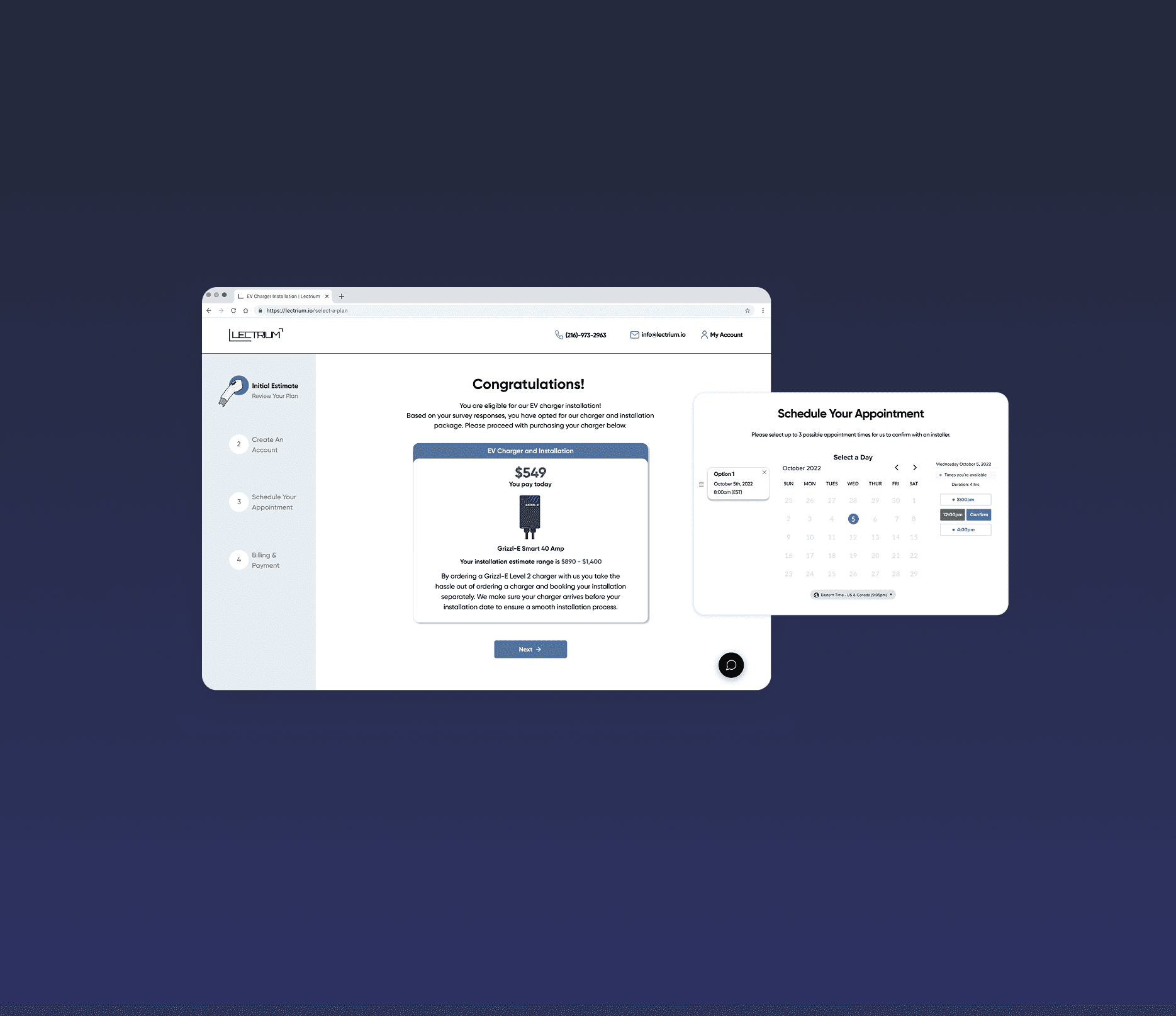
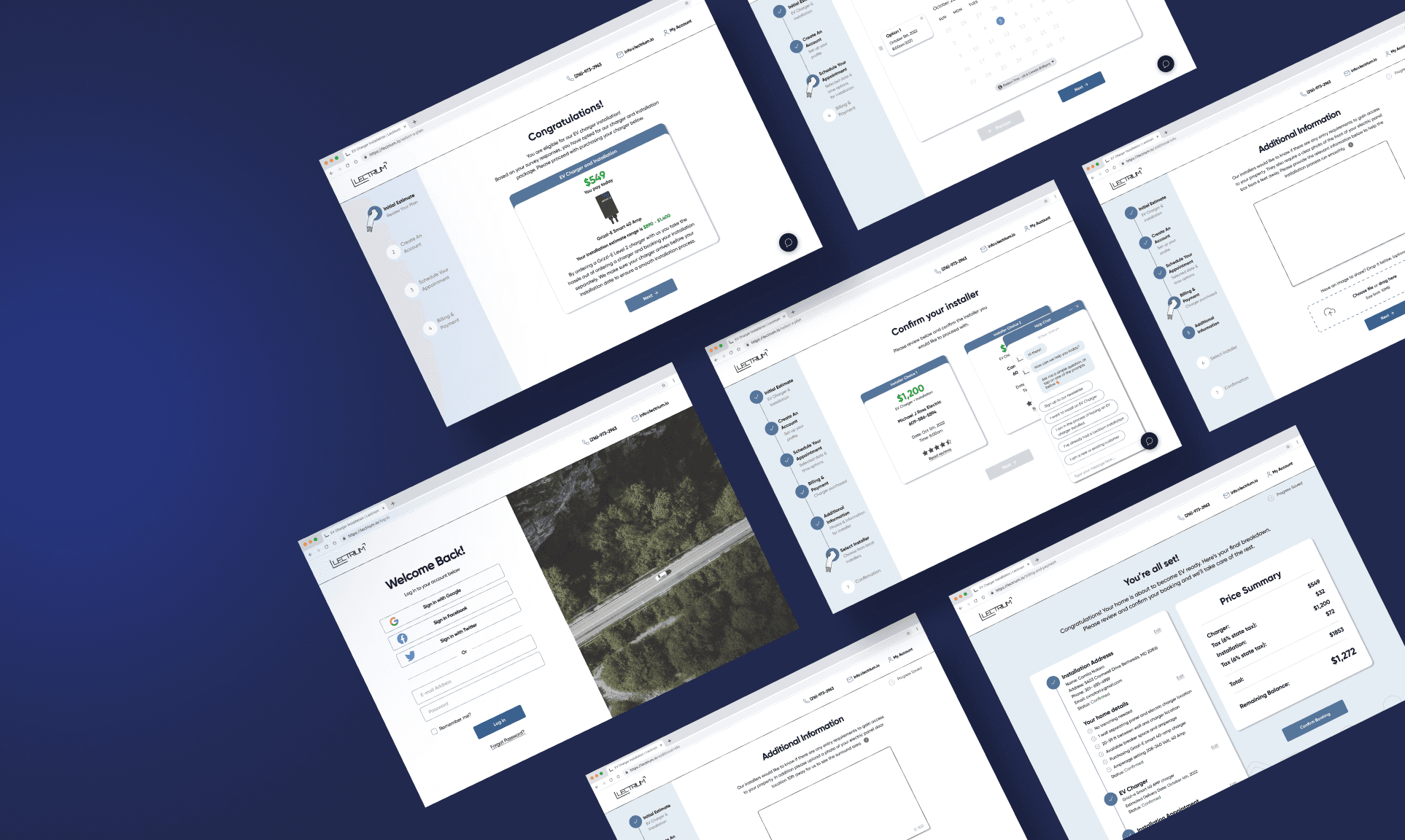
Lectrium is a full-service platform for electric vehicle home charging that simplifies the installation process through transparent pricing, certified electricians, and smart scheduling. Currently, homeowners complete an online survey to determine eligibility, and Lectrium manages the remainder of the process through email follow-ups. The goal of this project was to transform that fragmented journey into a seamless post-survey experience—guiding users from eligibility to booking confirmation directly within the web platform across both desktop and mobile.
Lectrium is a full-service platform for electric vehicle home charging that simplifies the installation process through transparent pricing, certified electricians, and smart scheduling. Currently, homeowners complete an online survey to determine eligibility, and Lectrium manages the remainder of the process through email follow-ups. The goal of this project was to transform that fragmented journey into a seamless post-survey experience—guiding users from eligibility to booking confirmation directly within the web platform across both desktop and mobile.
The outcome
The outcome
Successful booking completion
Successful booking completion
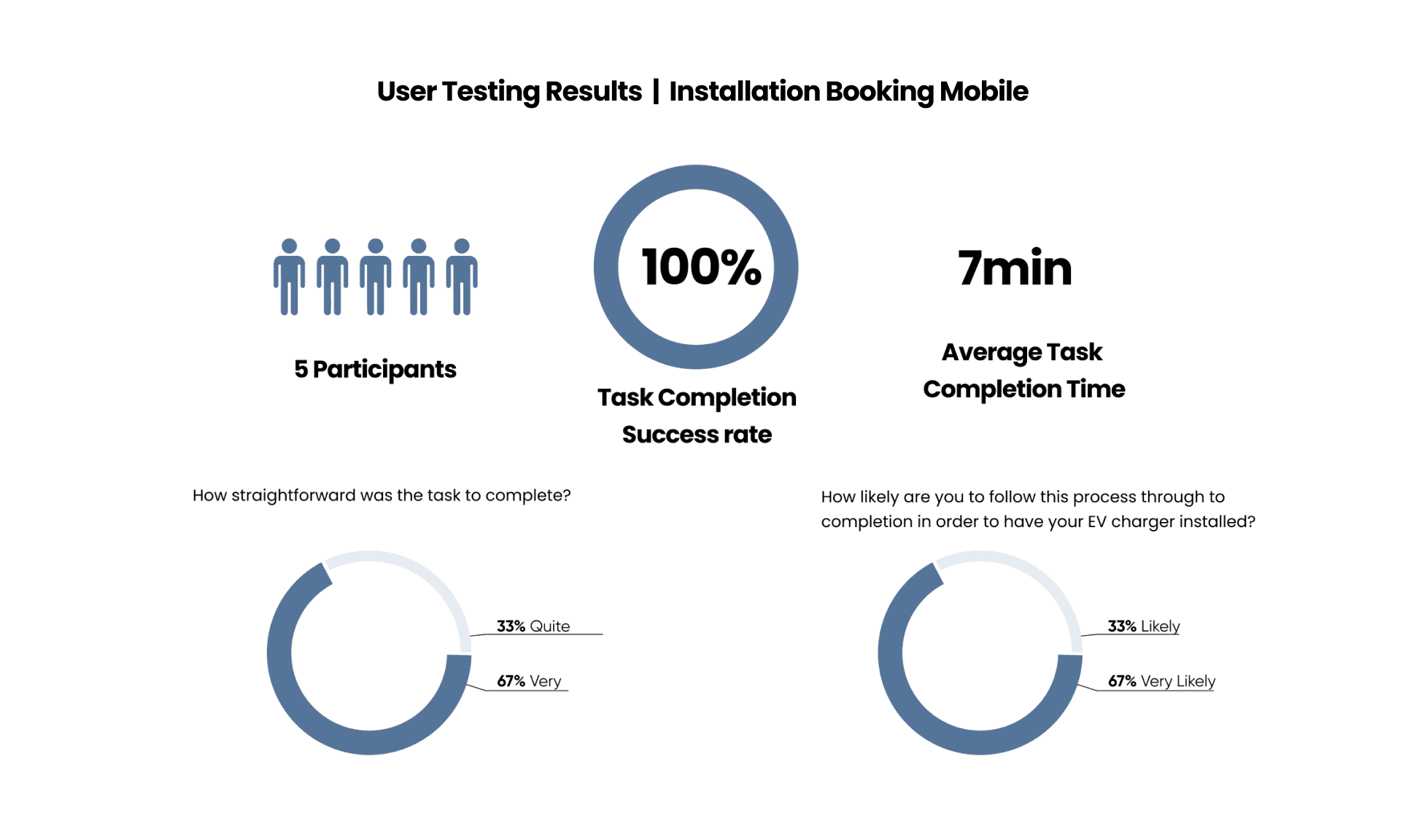
The redesigned onboarding flow for both mobile and web achieved a 100% task completion rate in usability testing, validating the clarity and effectiveness of the experience. These results exceeded client expectations and led to the solution being approved for engineering and integration into Lectrium’s platform.
The redesigned onboarding flow for both mobile and web achieved a 100% task completion rate in usability testing, validating the clarity and effectiveness of the experience. These results exceeded client expectations and led to the solution being approved for engineering and integration into Lectrium’s platform.
Our user
Our user
Who are we designing for?
Who are we designing for?
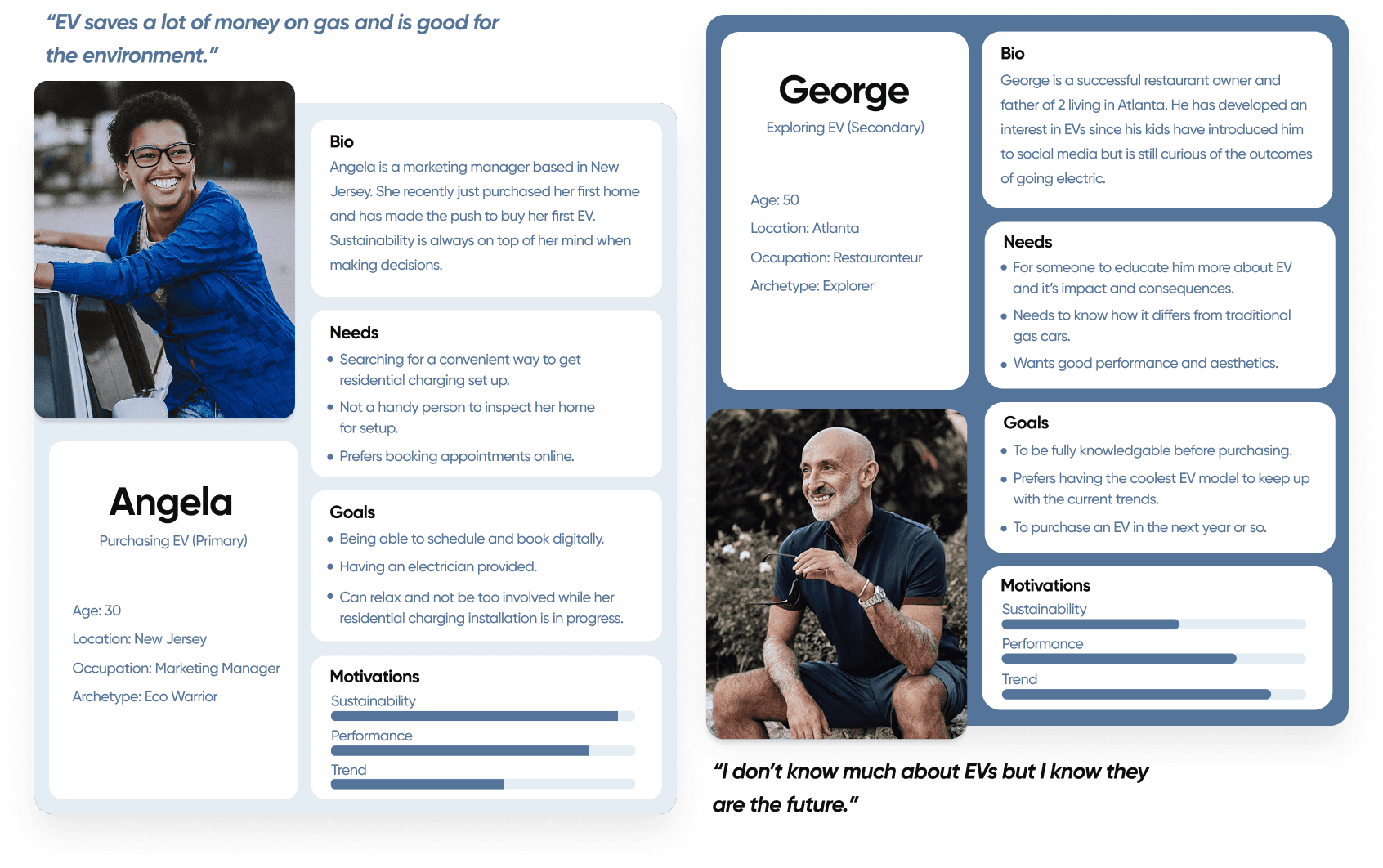
Lectrium has 2 target users they are aiming to reach for their service. We have user 1 Angela, who is purchasing an EV or has one and is looking to set up at-home charging. Then we have user 2 George, who is interested and exploring EV and curious to learn more.
Lectrium has 2 target users they are aiming to reach for their service. We have user 1 Angela, who is purchasing an EV or has one and is looking to set up at-home charging. Then we have user 2 George, who is interested and exploring EV and curious to learn more.
Discovery
Discovery
What did we find out?
What did we find out?
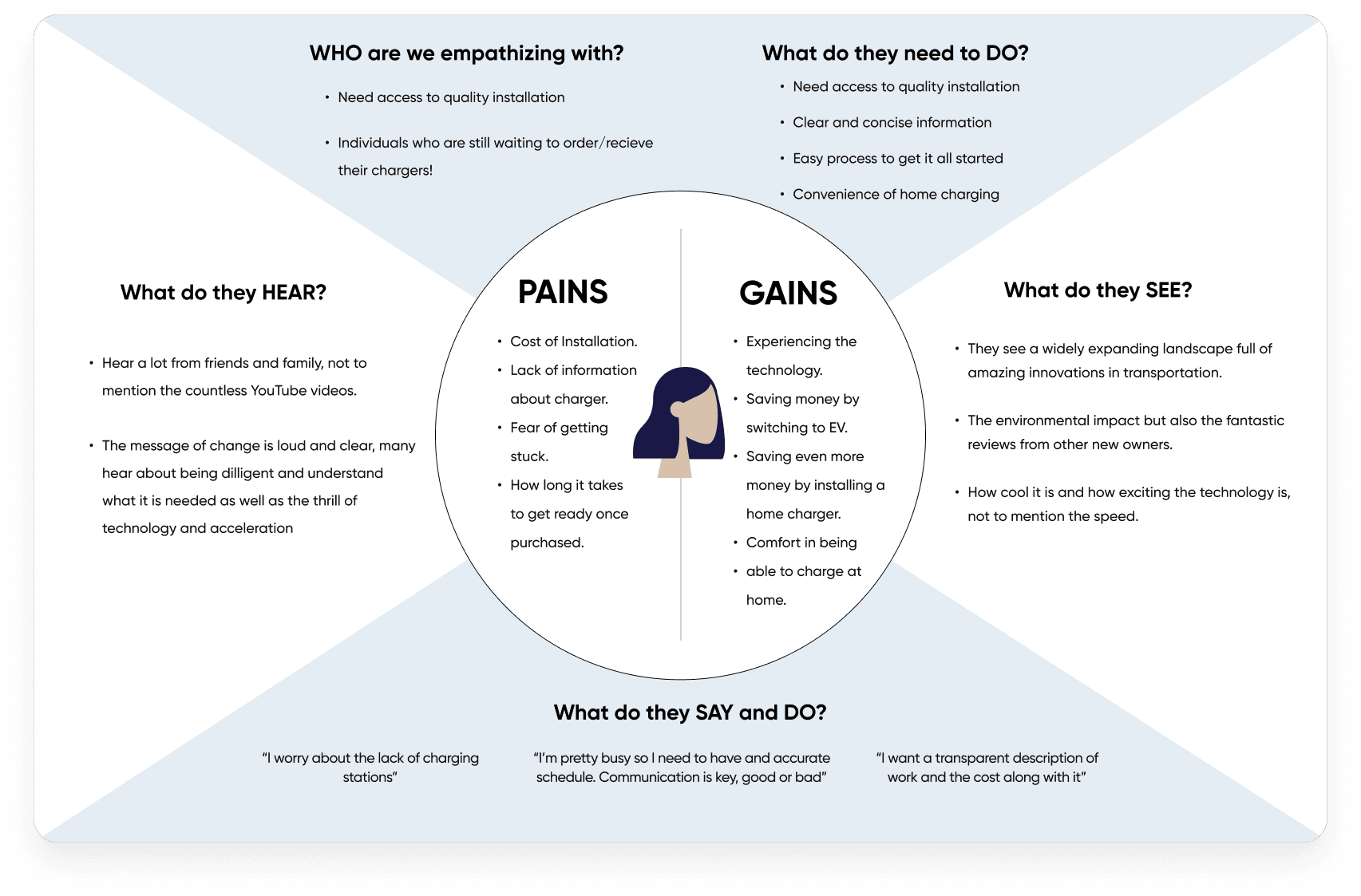
After conducting 8 rounds of user interviews, we created an empathy map to better understand our customer needs. Empathy mapping helped me realize what users think, say, do and feel can be different. I observed their behaviors as they navigated through the current website to collect data which enabled me to think from the user's perspective.
After conducting 8 rounds of user interviews, we created an empathy map to better understand our customer needs. Empathy mapping helped me realize what users think, say, do and feel can be different. I observed their behaviors as they navigated through the current website to collect data which enabled me to think from the user's perspective.
Competitor research
Competitor research
Who are the competitors?
Who are the competitors?
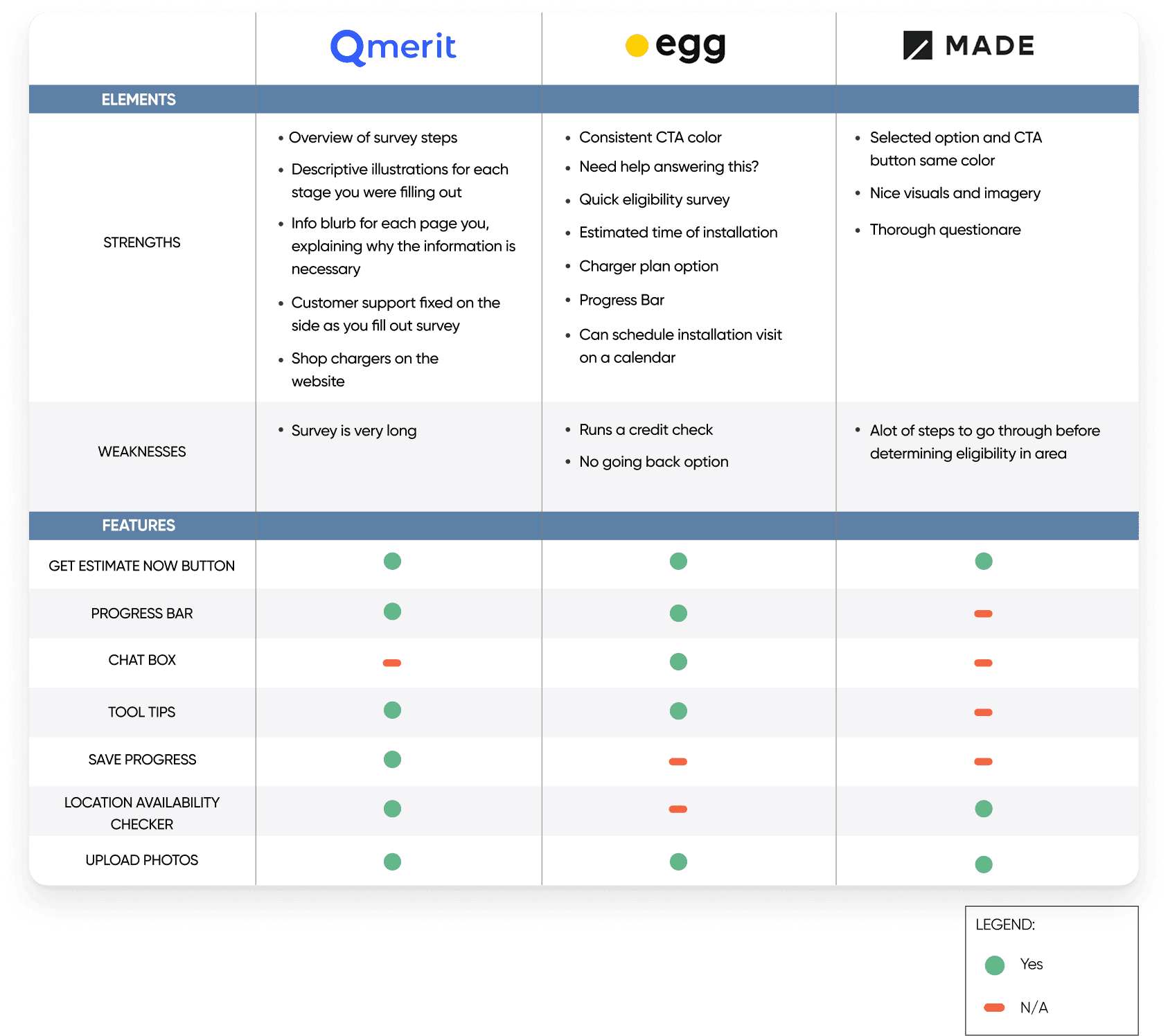
To further our research, we did a competitive and comparative analysis on 2 of Lectrium's key competitors, and another that has a similar business model but different product to gather a variety of insights.
To further our research, we did a competitive and comparative analysis on 2 of Lectrium's key competitors, and another that has a similar business model but different product to gather a variety of insights.
Challenge to solve
Challenge to solve
Understanding business operations
Understanding business operations
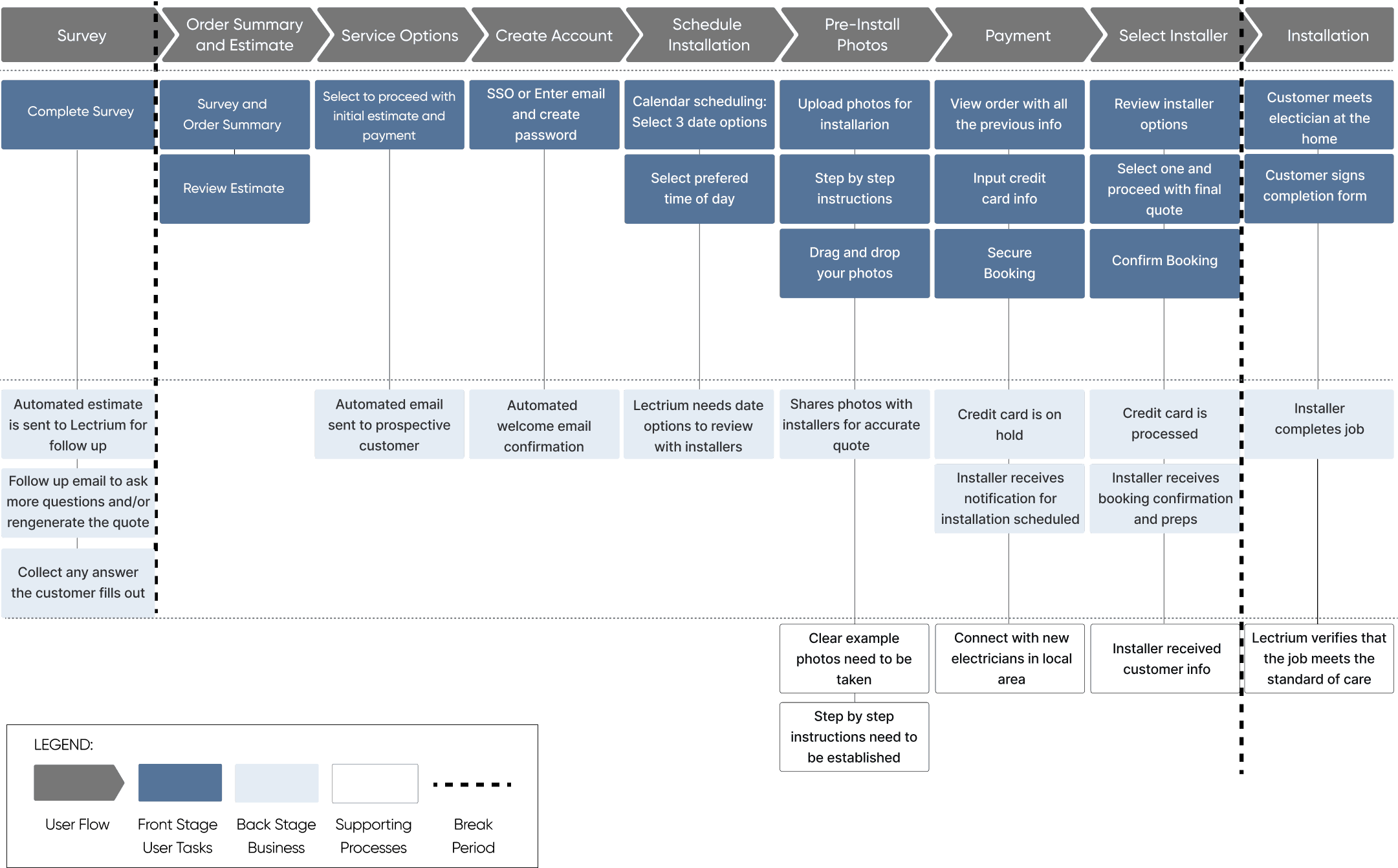
In order for us to build an effective user flow, we needed to understand how Lectrium’s service operates. We created a service blueprint to help us get an overview of the front end to back end operations. Our next step would be to conduct usability tests based off this flow and identify opportunities for improvement in the customer journey.
In order for us to build an effective user flow, we needed to understand how Lectrium’s service operates. We created a service blueprint to help us get an overview of the front end to back end operations. Our next step would be to conduct usability tests based off this flow and identify opportunities for improvement in the customer journey.
User testing
User testing
A/B test mid-fidelity
A/B test mid-fidelity
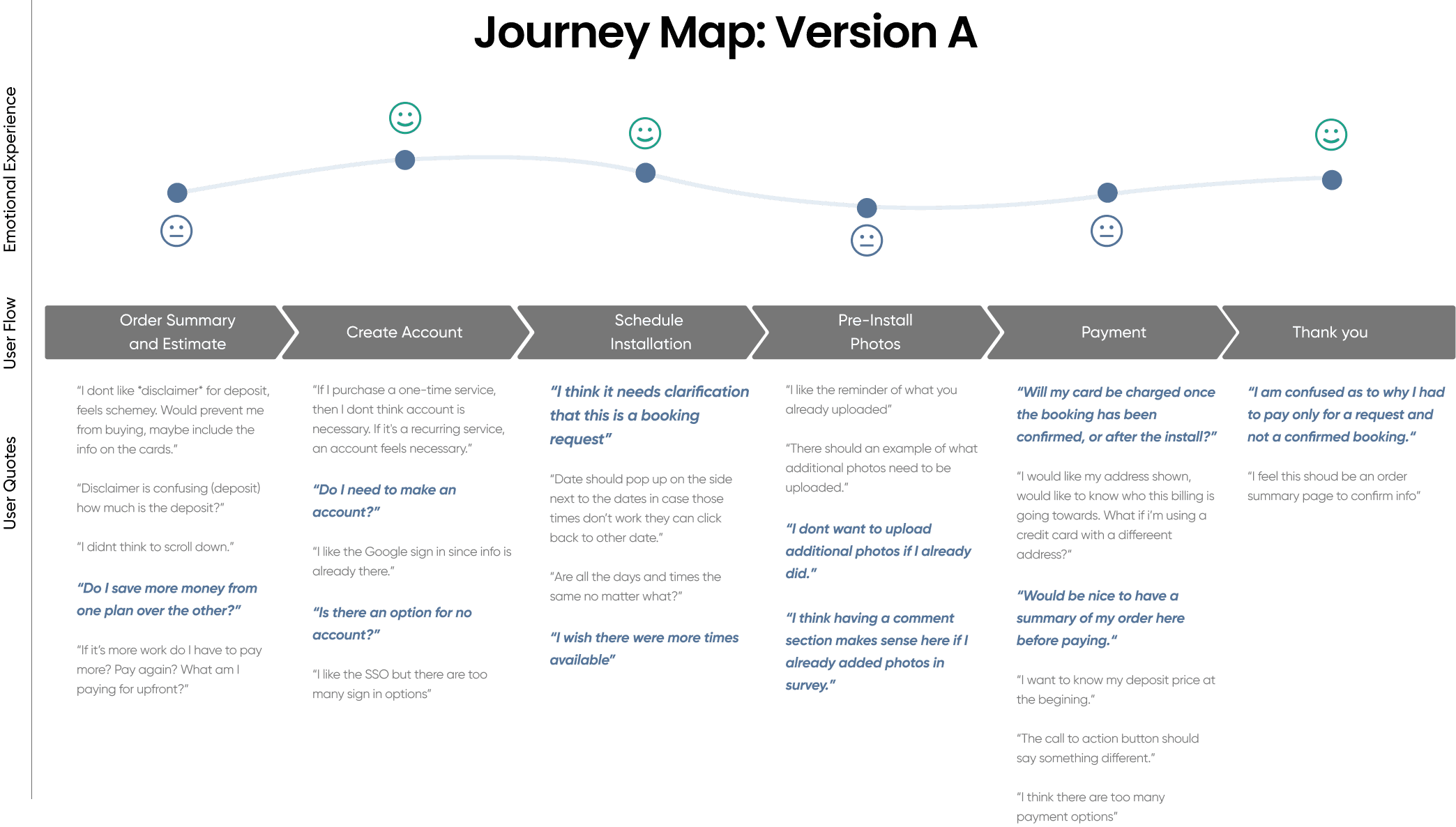
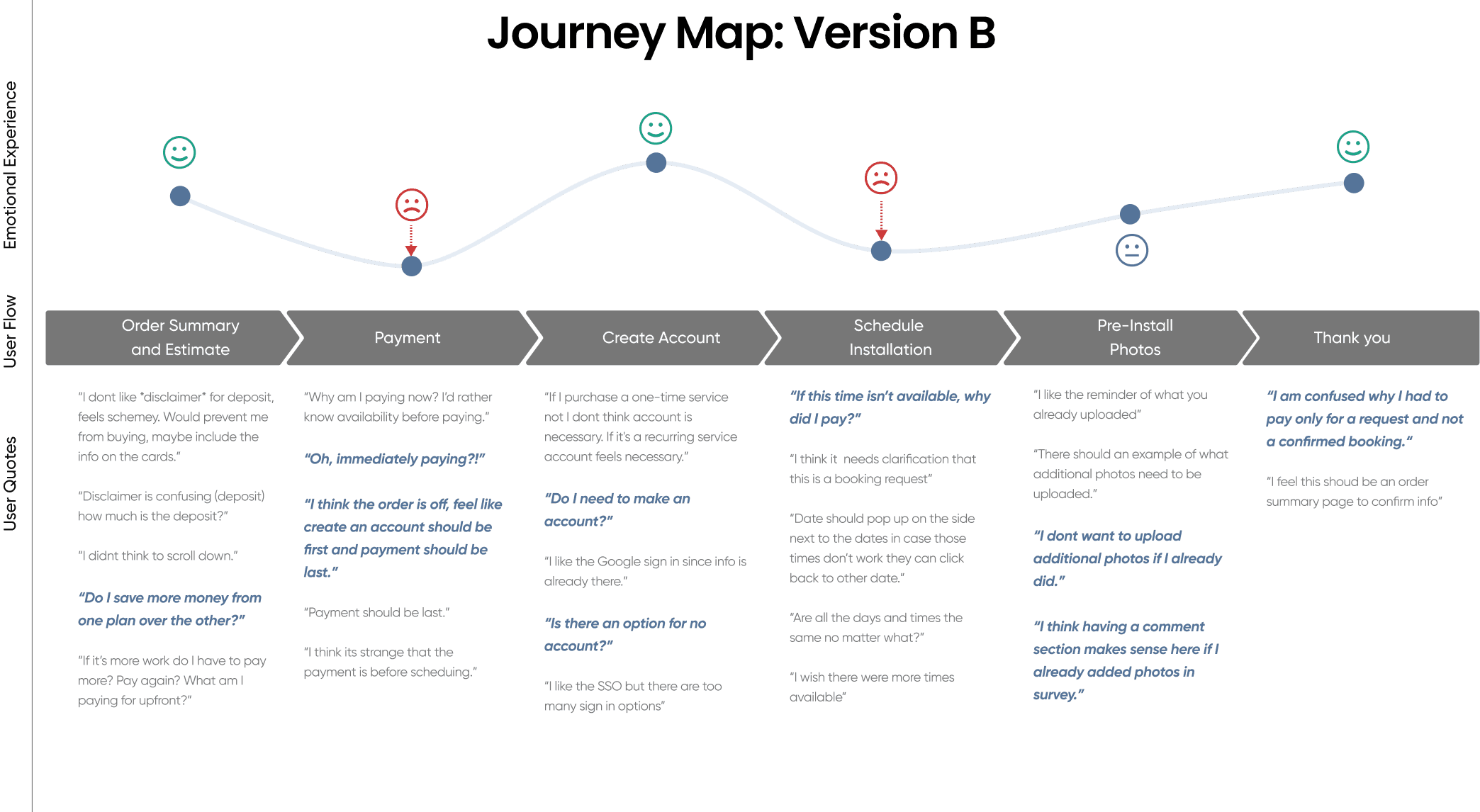
We compared two onboarding journey flows with different payment and scheduling sequences to satisfy business and customers needs. While Version B introduced an earlier deposit step to streamline backend operations, it created confusion and negatively impacted user confidence and emotional experience. Users questioned why payment was required before selecting a time and confirming their booking. Based on these insights, we aligned with stakeholders to move forward with Version A, refining the flow using user feedback before advancing to high-fidelity prototyping.
We compared two onboarding journey flows with different payment and scheduling sequences to satisfy business and customers needs. While Version B introduced an earlier deposit step to streamline backend operations, it created confusion and negatively impacted user confidence and emotional experience. Users questioned why payment was required before selecting a time and confirming their booking. Based on these insights, we aligned with stakeholders to move forward with Version A, refining the flow using user feedback before advancing to high-fidelity prototyping.
Design solutions
Design solutions
Delivering the product
Delivering the product
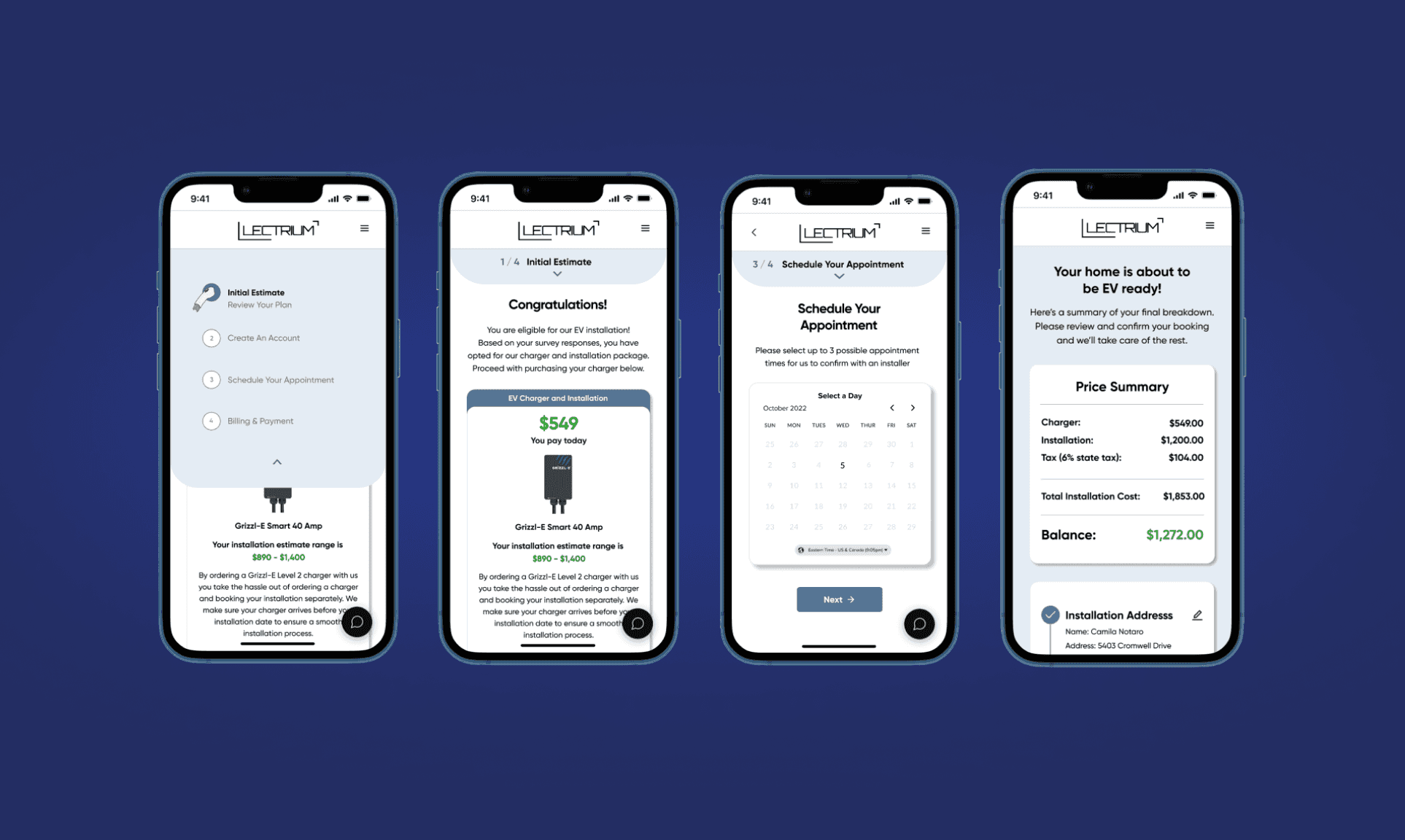
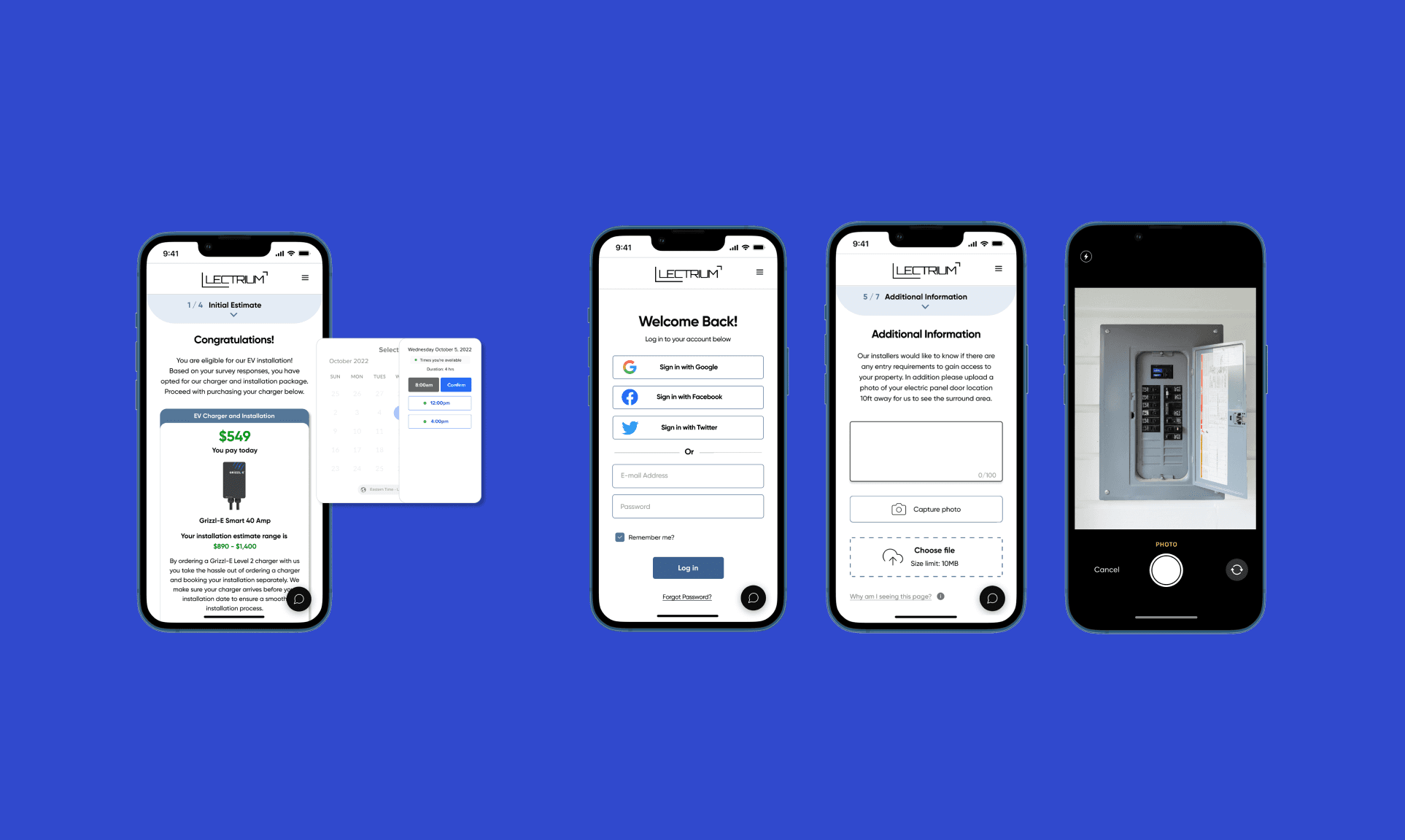
Working in an agile collaboration with our client, we refined the user flow based on insights from the first round of high-fidelity usability testing. To improve clarity and reduce cognitive load, we introduced a summary page at the end of each task so users could easily review their progress and next steps. We also simplified the estimate experience by removing complex plan options and tailoring payment choices based on customer needs. The updated flow guides users through account creation, appointment selection, billing, and confirmation, with the flexibility to return later to upload additional photos, provide installer instructions, and finalize their booking with confidence.
Working in an agile collaboration with our client, we refined the user flow based on insights from the first round of high-fidelity usability testing. To improve clarity and reduce cognitive load, we introduced a summary page at the end of each task so users could easily review their progress and next steps. We also simplified the estimate experience by removing complex plan options and tailoring payment choices based on customer needs. The updated flow guides users through account creation, appointment selection, billing, and confirmation, with the flexibility to return later to upload additional photos, provide installer instructions, and finalize their booking with confidence.
Retrospective
Retrospective
What I learned 💭
What I learned 💭
Designing for kids television has been an invaluable learning experience for me. Throughout the project, I gained a deep understanding of the unique needs and preferences of young users and parents. It's important to provide a guided experience to cater to different behaviors. I also learned that exploring a variety of design iterations helped build upon new ideas that can influence other features.
Designing for kids television has been an invaluable learning experience for me. Throughout the project, I gained a deep understanding of the unique needs and preferences of young users and parents. It's important to provide a guided experience to cater to different behaviors. I also learned that exploring a variety of design iterations helped build upon new ideas that can influence other features.